










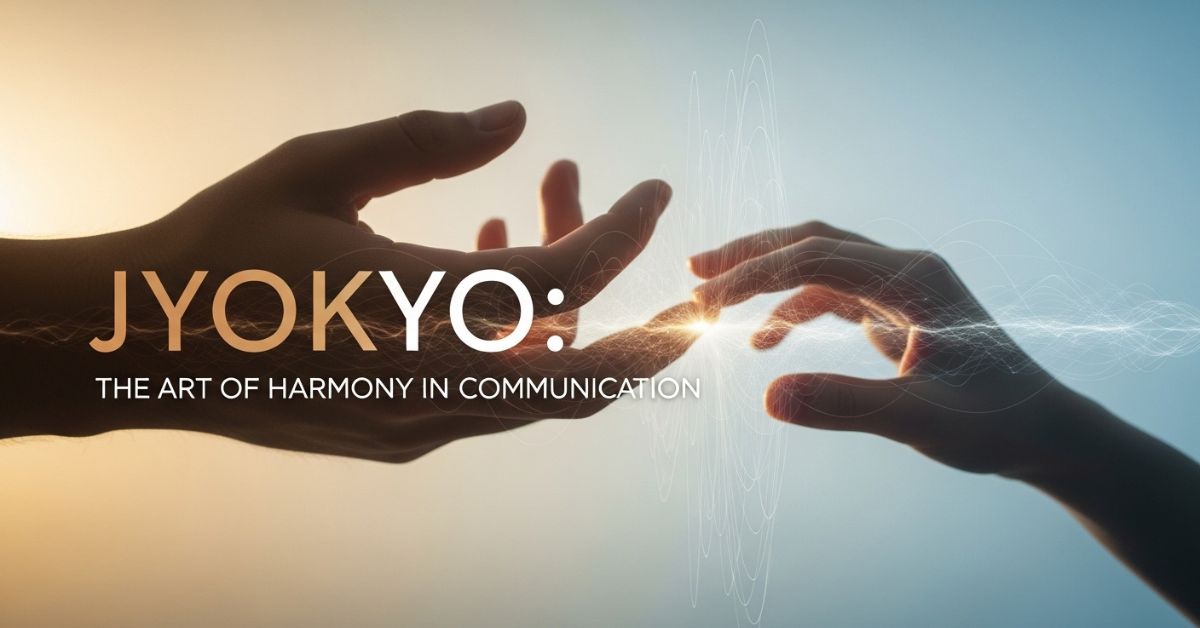
Introduction to Jyokyo
Picture this: you’re entering a busy café in Tokyo, where the sound of people talking and the scent of freshly brewed coffee mix. People’s interactions have a subtle cadence, a harmony that seems to happen naturally. Here we find the deep idea of Jyokyo, which originates in Japanese culture and stresses the need of social awareness, context, and harmony.
A gateway to deeper interactions and lasting connections is unlocked when one understands Jyokyo. It encourages us to pay attention to more than just our own emotions; it calls us to make sure that everyone feels appreciated. The more we explore this intriguing idea, the more you’ll see how it may improve your communication skills and the way you view the world around you. Join me as we delve into the heart of Jyokyo!
The Meaning and Origin of Jyokyo
The intriguing idea of jyokyo has profound cultural roots in Japan. The fundamental elements of social interactions that it embodies are harmony, context, and awareness.
The name combines the two essential components “jo,” meaning peaceful or mild, and “kyo,” signifying harmony or mutual comprehension. All things considered, they show how people can interact with one another without losing their cool.
During the Edo period in Japan, when decency and tact were highly valued, Jyokyo came into being. That people put their own needs on the back burner in favor of the greater good is indicative of a community mentality.
To fully grasp Jyokyo, one must be sensitive to subtleties of culture. People should be considerate of their environment and one other’s emotions when interacting, according to the idea. Practicing mindfulness in social situations helps people connect on a deeper level via empathy and respect.
Applying Jyokyo in Social Interactions
We can change the way we connect with people by applying Jyokyo in our social relationships. It stresses the need of being sensitive to other people’s feelings and needs. This level of empathy encourages more meaningful connections.
Take a moment to look around while you’re talking. Pay attention to the tone of speech, facial expressions, and body language. In order to keep the peace, you might use these signals to direct your reactions.
In this context, empathy is vital. To foster empathy, try placing yourself in another person’s position. This method encourages honest communication while simultaneously strengthening relationships.
Being an engaged listener is also crucial. Pay attention to what other people are saying instead than thinking about how to respond. Validating their experiences and strengthening connection are both facilitated by reflecting their sentiments.
Jyokyo is about more than simply maintaining harmony; it’s about cultivating authentic connections by being mindful of and considerate of one’s surroundings.
The Importance of Harmony in Japanese Culture
A fundamental aspect of Japanese culture is harmony, or wa. From interpersonal relationships at home to office politics, it’s everywhere.
To keep the peace in Japan, it’s common to put the needs of the collective ahead of those of the individuals. By working together, we may lessen disagreements and strengthen bonds. Without being overtly confrontational, people often communicate in subtle ways that foster understanding.
This notion is the basis for the design of social events. There is an implicit expectation to maintain harmony and collaboration even in informal encounters.
The importance of ritual and aesthetics in achieving peace is well illustrated in Japanese art forms like tea ceremonies. In an effort to establish a calm environment, every action has meaning.
Respect for others’ emotions and points of view is a cultural value that defines relationships and impacts decision-making. People understand the value of community support and empathy via these actions.
Contextual Awareness in Communication
Communication, particularly under the Jyokyo paradigm, relies heavily on contextual awareness. This is more than just talking; it’s about figuring out the social dynamics and environment.
Understanding non-verbal clues is crucial in interactions. Subtle shifts in vocal intonation or body language can express more than words alone. By keeping context in mind, misconceptions can be avoided.
The reception of communications might be influenced by knowing who you are speaking to. One way to get to know someone better is to adapt your approach to their age, culture, or even the news of the day.
Japanese people are masters of this nuanced craft. In order to keep the peace in social situations, they are good at reading nonverbal cues and adjusting their conduct appropriately.
People can improve their communication skills and have more meaningful conversations with others if they work on their contextual awareness. It’s a must-have talent that improves personal and professional connections.
Examples of Jyokyo in Everyday Life
Unbeknownst to many, Jyokyo has a significant influence on many aspects of daily life. The Japanese, for example, are known to casually check the amount of food left on one other’s plates when dining in a group. They are good at reading body language to know whether to provide extra food or when to urge someone to eat.
Nodding and silence are powerful nonverbal clues in conversation. These body language cues communicate comprehension without the need of words. Deeper connections are fostered by this understanding.
Another scenario where hierarchical dynamics are upheld is at corporate meetings. If younger team members want to keep the peace, they should wait for their elders to speak.
Respecting the personal space and tranquility of others, even in public places, individuals adhere to Jyokyo by keeping their distance and not making excessive noise. Maintaining composure and empathy in all of our interactions becomes a practice in mindfulness.
How to Incorporate Jyokyo into Your Own Interactions
Pay attention to the people around you as a starting point for incorporating Jyokyo into your relationships. Take note of their emotions and nonverbal signs. Being mindful of this will allow you to answer with greater consideration.
Then, work on your active listening skills. Communicate with others by nodding or making affirmative motions. Make it clear that what they are saying hits home; this will put you at ease.
Change your way of talking depending on where you are. You should be mindful of the person you are speaking to and their emotional state while choosing your words. This adaptability strengthens relationships.
Maintaining peace in groups should also be a top priority. Promote teamwork instead of rivalry by asking for everyone’s opinion.
Think about what went well and where you might make improvements after each interaction. You may become more adept at accepting Jyokyo ideals and navigating social dynamics via continuous self-assessment.
Conclusion
The complex social fabric of Japanese society can be better understood by delving into Jyokyo. Every contact should be characterized by harmony, context, and awareness, according to this idea. People can approach social situations with more empathy and consideration when they practice Jyokyo.
Jyokyo is an art form that brings people closer together; it’s more than just being courteous. It promotes the idea that every moment is special and deserves careful thinking. By making this idea a part of your everyday life, you may improve your interactions and foster a feeling of community.
Maintain an observant attitude when you interact with people. Be attentive while you listen and keep an eye out for the underlying emotions in what others are saying. Your connections will be strengthened and your conversations will be more meaningful if you follow these principles.
What Jyokyo teaches us is that there’s more to communication than just words; it’s about connecting with others on a deeper level via empathy and understanding. In your pursuit of more harmonious relationships, may you find solace in this lovely facet of Japanese culture.